Product Discovery
New Product Feature Discovery Project
Company
Wolt / DoorDash
My Role
Product Lead Intern
Tools
Lovable Figma Miro ChatGPT Claude Looker Snowflake Mixpanel Slack
Year
2025
Description
I led a product discovery project for Wolt’s package delivery. The project started from an unexpected usage pattern in MVP data: users were using Wolt’s peer-to-peer delivery feature to have couriers pick up e-commerce orders from automated package lockers. My role was to investigate whether this was a real customer problem worth solving, validate the business and user value, and help turn the insight into a clearer product direction.
Context
I worked in Wolt’s New Business group on the Wolt Drive team, focusing on two related delivery products: Wolt Parcel and Wolt Packages. Wolt Parcel served local online businesses with scheduled deliveries, while Wolt Packages was a consumer-facing peer-to-peer delivery product in the Wolt app. Although the products served different customer groups, they shared many operational and user experience challenges around package delivery: pickup instructions, courier capacity, timing, handovers, and delivery reliability.
Problem and Insight
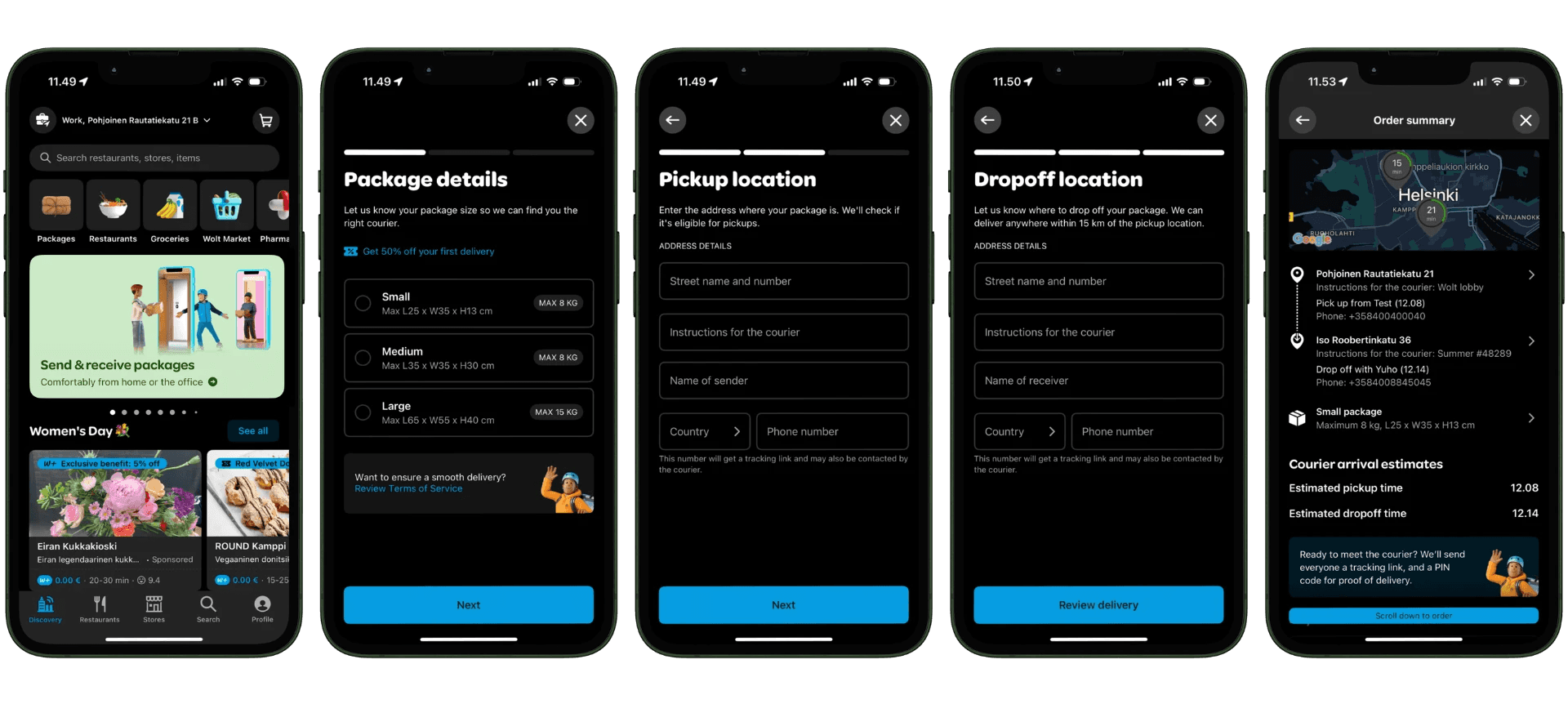
In the product data, we noticed that some users had found a new use case on their own. Instead of using Packages only for peer-to-peer deliveries, they were scheduling Wolt couriers to pick up online orders from package lockers around the city.
Users already wanted a more convenient way to get locker deliveries home. However, the existing flow was not designed for that behavior. Users had to force the use case into the wrong product flow, for example by placing pickup codes in fields meant for special requests. This created a messy UX, wasted courier time, and left potential revenue on the table.
The key question became: is this just a random workaround, or a real product opportunity?
Process
Rather than jumping straight into building, we treated the project as a discovery and risk-validation project. I started by framing the opportunity through a Product Brief: the background, problem statement, market opportunity, goals, non-goals, success metrics, and open questions. The main risks we needed to validate were business viability and customer value.
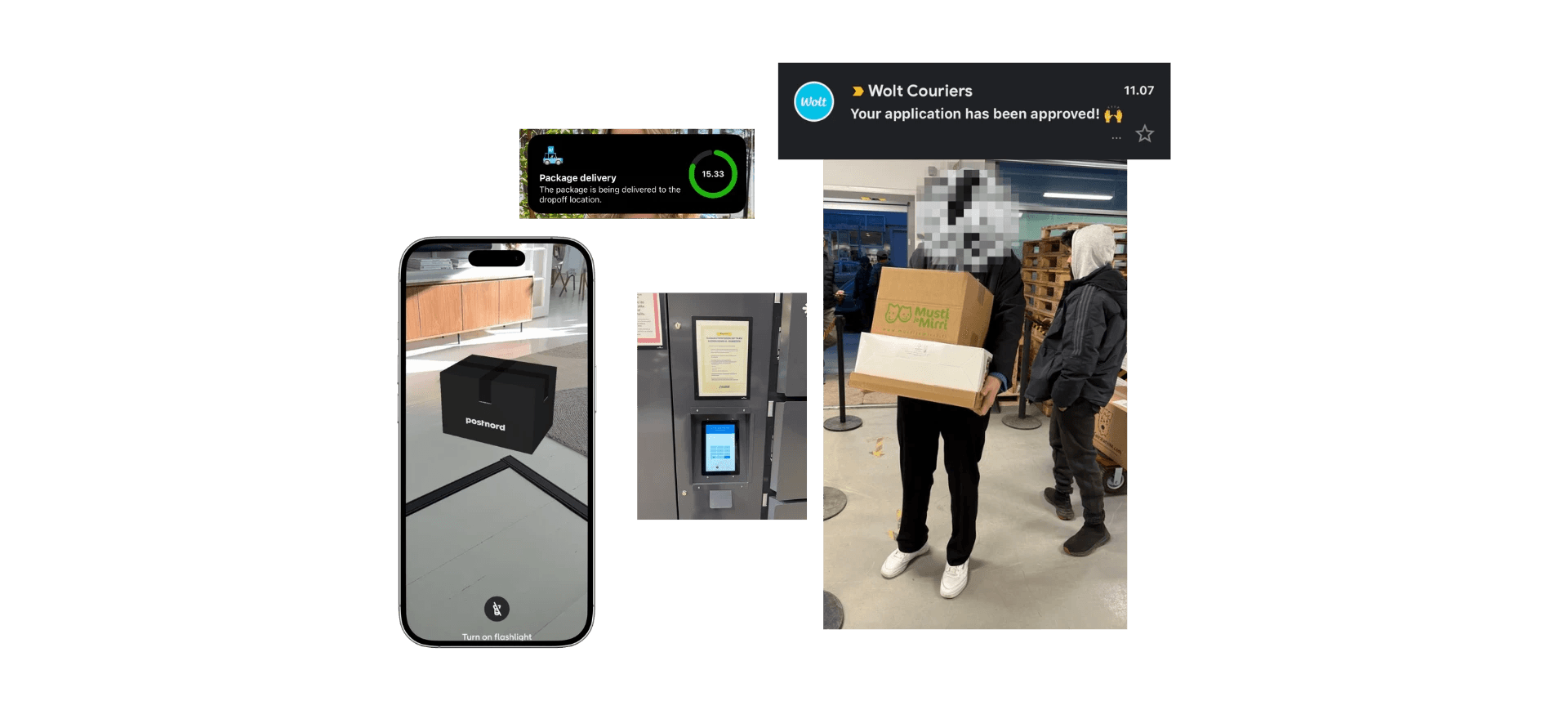
From there, the work moved from data into qualitative discovery. Together with design and other stakeholders, we used methods such as user interviews, courier partner discussions, journey mapping, prototyping, field research, JBTD analysis, and competitor benchmarking.
A big part of the work was also alignment. I helped keep product, design, engineering, local teams, courier experience, and other internal stakeholders connected around the same problem and the same evidence.
Solution
The discovery showed that package locker pickup was a real and strategically relevant problem. It fit Wolt’s broader ambition of delivering almost anything in cities, and it connected naturally to the growth of last-mile convenience.
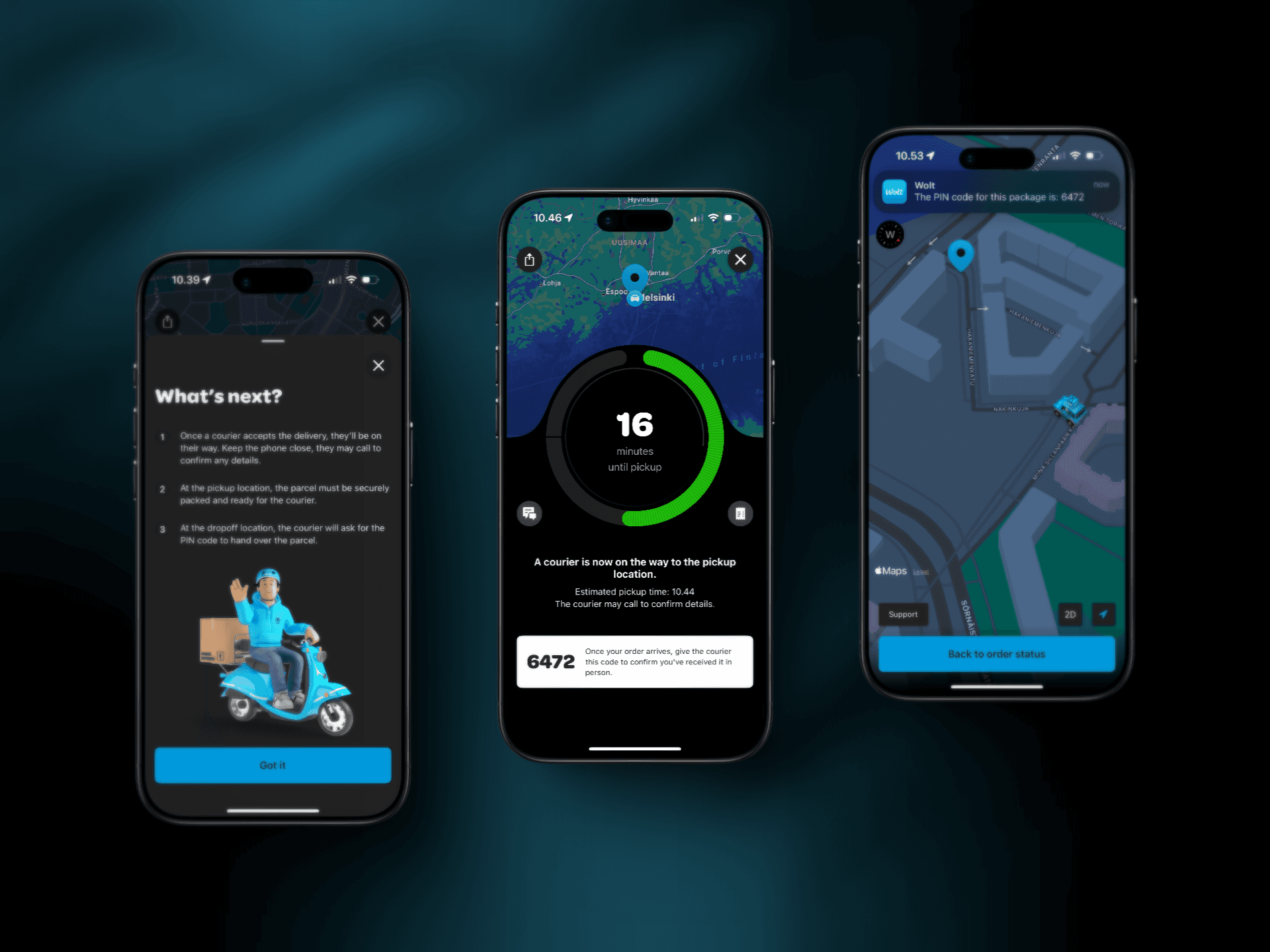
The solution direction was to improve the existing package delivery experience so it could better support locker pickup behavior. We used it as input for product improvements: clearer flows, better handling of pickup information, and a more reliable experience for both users and courier partners.
The findings influenced both Wolt’s consumer-facing package delivery product and related B2B delivery products. The Packages UX was optimized to address the most critical issues uncovered during discovery.
Takeaway
The project was a strong example of how product discovery can turn an unexpected user behavior into a validated product opportunity. What first appeared as a workaround in the MVP data became a signal of real customer demand, operational friction, and strategic potential.
Our project helped de-risk the opportunity before committing more resources to it. By combining data analysis, user research, courier partner input, prototyping, and cross-functional alignment, we were able to separate a nice-to-have improvement from a problem worth solving. Ultimately, the discovery influenced both Wolt’s consumer-facing and B2B package delivery products, and the Packages UX was optimized to address the most critical issues uncovered during the project.